What the Anion Gap Indicates
The anion gap is a computed measure that assists clinicians and patients in understanding the ratio of ions in the blood. It is based on a common electrolytes panel, especially sodium, chloride, and bicarbonate. Because routine blood testing does not measure every charged molecule, the anion gap estimates the amount of unmeasured anions in the serum chemistry profile.
At its core, the anion gap reflects acid-base balance. When acids build up in the body, the gap can go up, suggesting a possible metabolic derangement. This is why the anion gap is used as a diagnostic aid rather than a standalone diagnosis. It is a form of blood test interpretation that can reveal an anion difference even when other values seem only slightly off.
The basic calculation formula checks measured cations and anions, usually using serum sodium, serum chloride, and serum bicarbonate. The result helps clinicians understand whether there is extra acid in the blood, often from acid accumulation. In practice, the anion gap is part of a larger screening tool for evaluating unexplained symptoms, abnormal lab results, and acid-base disorders.
How to Operate an Anion Gap Calculator
An anion gap calculator makes easier the calculation and helps users rapidly determine whether the result falls within the expected reference range. To apply it, input the serum sodium, serum bicarbonate, and serum albumin values if the tool includes albumin adjustment. Certain calculators also allow direct entry of serum chloride for verifying the equation.
A standard formula is:
Anion gap = sodium - (chloride + bicarbonate)
As serum albumin is a major unmeasured anion, many calculators also offer a corrected anion gap. That matters when albumin is low, since the uncorrected number may mask clinically important acid-base abnormalities. The albumin adjustment increases the reliability of the interpretation and makes the result more useful for risk assessment.
A calculator is especially useful when reviewing lab results during time-sensitive or complex cases. It can point out a possible anion deficit or a pattern consistent with hidden acid-base trouble. Even so, the number should always be interpreted with the rest of the blood work, symptoms, and overall clinical picture.
Typical, High, and Reduced Anion Gap Results
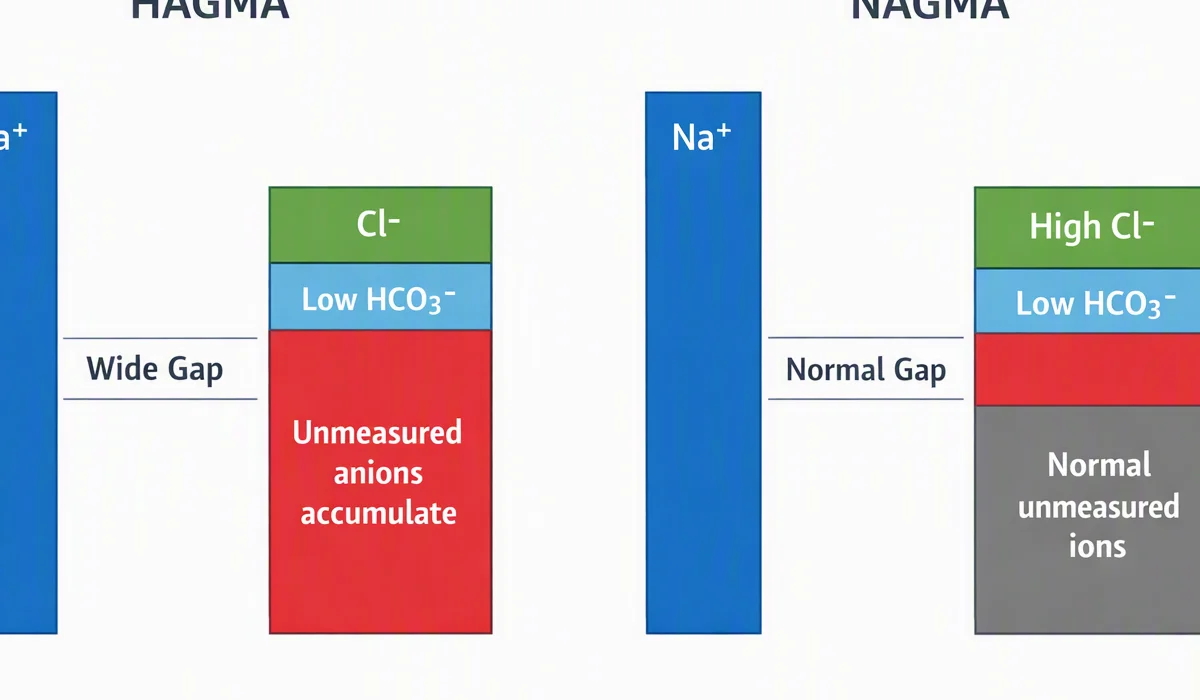
A normal anion gap usually means the balance between measured electrolytes is within the expected reference range. Still, a normal result may not eliminate disease. Sometimes, there may even be acid buildup if the body is losing bicarbonate and replacing it with chloride, which leads to a normal anion gap result.
A increased anion gap metabolic acidosis shows that unmeasured acids are building up in the blood. This result often prompts a search for the underlying source of acid. A high result is not a diagnosis by itself, but it is a important clue that something is affecting the body's acid-base system.
A reduced anion gap is uncommon and can occur with laboratory issues, low albumin, or unusual blood chemistry patterns. Because the calculation depends on the measured electrolytes, a low result should also be reviewed carefully in context. The key point is that both high and low values require careful interpretation rather than automatic conclusions.
Reasons Why Hidden metabolic acidosis Can Be Missed
Metabolic acidosis can be easy to miss, especially in the beginning or when the body partially adjusts. One reason it is missed is compensatory hyperventilation, which decreases carbon dioxide and can make the patient appear only mildly ill at first. Another reason is a mixed acid-base disorder, where one abnormal process balances out another and the final numbers look less striking than expected.
Clinical symptoms may also be non-specific. Fatigue, feeling sick, weakness, or mild confusion can be overlooked or linked to another problem. That is why the anion gap is valuable as a clue in the setting of suspected metabolic acidosis. It can detect hidden acid gain even when the patient is not obviously unstable.
The anion gap is especially useful because it can show an abnormality before the full clinical picture becomes obvious. In that sense, it works as a practical screening tool for acid-base disorders. When combined with labs and bedside findings, it supports better clinical correlation and more accurate diagnosis.
Common Causes of a Increased Anion Gap
A number of conditions can cause a high anion gap metabolic acidosis. A primary cause is lactic acidosis, in which lactate builds up when tissues do not get enough oxygen or when metabolism is stressed. A further cause is ketoacidosis, which can occur with diabetes, starvation, or heavy alcohol use. In these situations, acid production goes up and moves the gap upward.
Renal failure can also lead to a high anion gap because the kidneys cannot clear acid efficiently. As renal function declines, acids and other retained solutes contribute to the elevation. This makes for kidney-related acid-base changes an important part of any serum chemistry review.
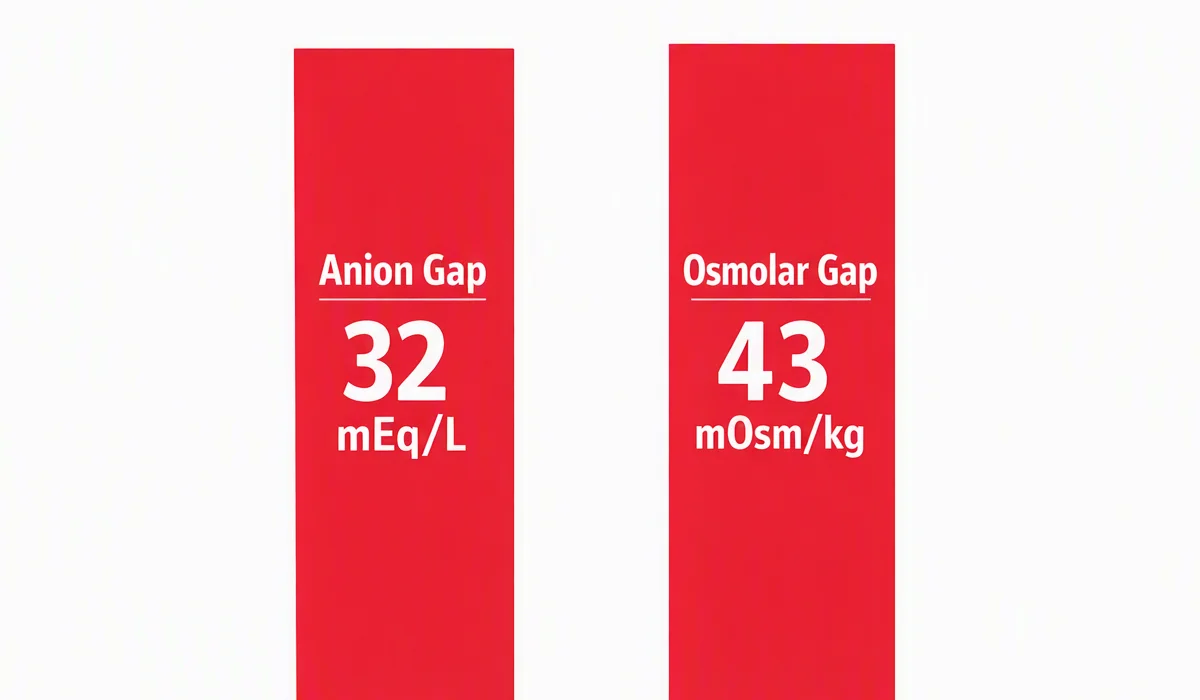
Toxic alcohols are another critical cause. Substances such as methanol or ethylene glycol can produce dangerous acid metabolites and lead to a large gap. In certain cases, the osmolar gap may also be elevated, which offers another clue that a toxic ingestion may be involved. Because these causes can be life-threatening, the result should be interpreted quickly and in context.
Adjusting for Albumin and Why It Matters
Hypoalbuminemia can make the measured anion gap seem falsely normal or only mildly elevated. Since albumin has a negative charge, lower albumin lowers the baseline gap. That means an important acid-base problem may be hidden unless a corrected anion gap is calculated.
The idea behind albumin correction is clear: if albumin is low, the reported gap should be adjusted upward to better represent the true acid burden. This improves acid-base interpretation and helps reveal hidden metabolic acidosis. In other words, the corrected value may uncover clinically important unmeasured anions that were not obvious in the raw number.
For this reason, albumin should be considered whenever the anion gap does not match the clinical picture. A normal-looking result in a patient with low albumin may still mask a real acid-base abnormality. The corrected value provides a more accurate framework for understanding the patient's serum chemistry and overall status.
How anion gap Works with blood gas interpretation
The anion gap gets more useful when used with an arterial blood gas. The blood gas offers direct information about pH, PaCO2, and bicarbonate, while the anion gap assists identify whether the problem reflects acid accumulation. In combination, they provide a better picture of the acid-base state.
If the pH is low and bicarbonate is reduced, metabolic acidosis is likely. The PaCO2 can indicate whether respiratory compensation is occurring, such as through faster breathing to blow off carbon dioxide. If the anion gap is high, that points toward a gap-producing disorder rather than plain bicarbonate loss.
In many cases, the blood gas and anion gap should be read together rather than separately. A patient may have an abnormal gap with only mild changes on the gas, or vice versa. That is why clinical correlation matters: the numbers need to fit the patient's condition, symptoms, and broader diagnostic context.
Restrictions of the Calculator
Although a carefully built calculator has limits. Lab variability can alter the result because different instruments and methods may yield slightly different electrolyte values. Minor differences in sodium, chloride, or bicarbonate can change the final gap enough to affect analysis.
Analytical error can also play a role. A single unexpected result may reflect collection or processing issues rather than a true physiologic change. That is why the anion gap should not be used in isolation. It is only one part of the overall assessment.
The calculator does not replace the broader workup for acid-base problems. The serum osmolality gap, other chemistry values, and clinical findings may be necessary to identify toxic ingestions, kidney problems, or other causes. In the end, the value is best viewed as a helpful clinical aid that still requires careful clinical interpretation.
When Medical Evaluation Is Needed
Abnormal anion gap results should be taken seriously when they occur with warning symptoms. These may include worsening weakness, persistent vomiting, severe dehydration, or signs that the body is struggling to maintain normal acid-base balance. Because the anion gap can be linked to serious disease, prompt evaluation may be necessary.
Confusion and breathing trouble are especially important warning signs. Confusion can reflect worsening acid-base disturbance, poor perfusion, or toxin exposure. Shortness of breath may signal compensatory hyperventilation or another emergency process. In these situations, urgent care is appropriate rather than waiting for repeat testing.
If a person has abnormal lab results along with symptoms, the next step is typically clinician review and additional testing. The anion gap is useful for early detection, but it does not replace medical judgment. Rapid assessment is especially important when toxic alcohols, severe lactic acidosis, or advanced renal failure are possible.
Frequently Asked Questions
What is anion gap calculator used for?
An anion gap calculator is used to efficiently estimate the anion gap from routine lab values and help finding possible acid–base disorders. It is especially useful for identifying hidden metabolic acidosis, estimating unmeasured acids, and guiding further interpretation of lab results. When albumin is included, it can also improve the accuracy of the corrected anion gap.
What is a high anion gap mean in metabolic acidosis?
A high result usually implies that excess acids are rising in the body, creating high anion gap metabolic acidosis. Common causes include lactic acidosis, ketoacidosis, renal failure, and toxic alcohols. The number is a indicator that should be matched with blood gas findings, symptoms, and the rest of the electrolyte data.
How can you correct the anion gap for low albumin?
When hypoalbuminemia is present, the measured gap may be falsely low. A corrected anion gap modifies the result upward to account for reduced albumin. This albumin adjustment helps support acid-base interpretation and can uncover a hidden gap that was masked by low protein levels.
Can you still have a normal anion gap with metabolic acidosis?
Yes. A normal anion gap can still occur in metabolic acidosis, especially when bicarbonate loss is balanced by an increase in chloride. This is often called normal anion gap, or hyperchloremic, metabolic acidosis. That is why the result must be interpreted with the rest of the serum chemistry and not used alone.
Which conditions may cause a low or high anion gap?
A high anion gap can result from lactic acidosis, ketoacidosis, renal failure, or toxic alcohols. A low anion gap may occur with hypoalbuminemia, lab issues, or less common blood chemistry patterns. Because both are influenced by the full electrolyte panel, the result should always be reviewed with clinical correlation.
When do abnormal anion gap results be evaluated urgently?
Abnormal results should be evaluated urgently when they occur with urgent symptoms such as confusion, difficulty breathing, severe weakness, or signs of toxin exposure. When an abnormal gap is present alongside a low pH, changing PaCO2, or alarming arterial blood gas findings, urgent treatment may be needed. The anion gap is a useful warning sign, but serious symptoms should never ignored.